Hydrogen could be great... but actually, right now ... it's really REALLY BAD
Two-faced Hydrogen
Hydrogen is a futuristic non-polluting wonder-fuel. It can be made from electricity, and turned back into electricity with no harmful emissions. It's a fuel, it's a gas, and at first glance, it looks ideal to replace fossil fuels in a whole bunch of applications. Until you look a little closer.
(1) Hydrogen is highly polluting to manufacture (at the moment). 96% of the world's hydrogen is still made from coal or natural gas, and causes 2% of the world's CO2 emissions.
(2) Hydrogen is much costlier than the fuels it might replace
Hydrogen for energy costs more than double the price of coal or gas it's made from, because the process wastes half of the energy, with capital costs of plant and processing on top of that.
(3) Hydrogen is very difficult (expensive) to store and distribute safely
Hydrogen is hard to handle, and contains only 1/3 of the energy of a similar volume of natural gas. Its tiny molecules leak even more readily than natural gas. Worse, the molecules make the network more fragile by dissolving into metals, causing metal pipes and joints to become more brittle.
"But" ... I hear you say ... "What about Electrolysis?"
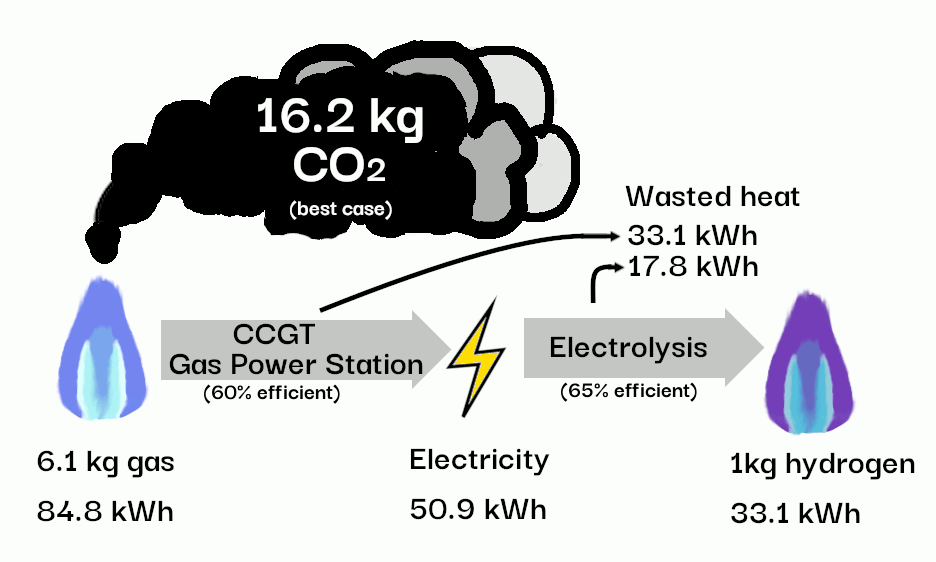
Yes, the long-awaited zero-pollution version, made from just water by electrolysis, is now being scaled up all over the world. Yet even this ‘green’ hydrogen hides a dirty secret: the electricity comes inefficiently from gas (or worse), causing even higher emissions - 50% higher.
Hydrogen from electrolysis is 50% dirtier than from fossil fuels, if the grid needs to burn gas to power it.
But when the grid has spare electricity - from too much wind and solar - suddenly electrolysis becomes emission-free, and a valuable resource to soak up the surplus power.
Hydrogen Fact file
Hydrogen today
The world produces 70m tonnes of hydrogen each year, mostly for oil refining or to make fertiliser.
About 2% (830m tonnes) of the world's CO2 emissions come from making hydrogen.
96% of hydrogen is made from either
methane or
coal
Much costlier and harder than natural gas to produce, store and distribute
Hydrogen costs around £1.50-£3 per kg, or £3-£6 if it's made by electrolysis
Hydrogen tomorrow
Main use of hydrogen likely to be for long-term storage of renewable energy for power.
Other uses could include manufacture of materials (eg steel, glass, concrete...)
It might even become affordable as a feedstock to make fuels for shipping and/or aviation
Hydrogen will remain too complicated and costly to be useful for transport or domestic sectors.
How dirty is hydrogen?
Hydrogen is conventionally described by different colours that denote how it is made:
 12t |
Grey |
Typically produces 9-14 tonnes of CO2 for every tonne of hydrogen produced. Variability depends upon the conversion and capture rate of the hydrogen produced, and overall thermal efficiency of the plant:
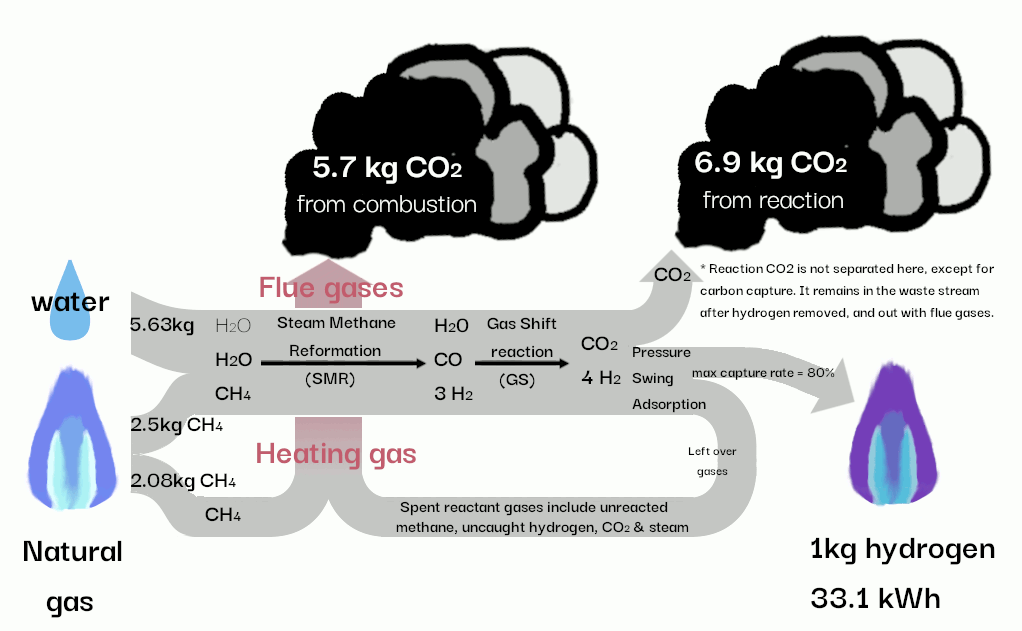
Three quarters
of the world's hydrogen is made this way. Most of the rest is made using coal (coal gasification) |
15t |
Black |
Similar to the SMR process,
coal is cooked in steam to make carbon monoxide and hydrogen, which reacts with more steam to make hydrogen and carbon dioxide.
C + H2O -> CO + H2 -> CO2 + H2 + H2
H2O H2O
Hydrogen from coal (CG process) typically produces 50% more carbon dioxide hydrogen from natural gas (SMR process), as well as high methane emissions from coal mines. CG accounts for about a quarter of all hydrogen produced. The rest is made mostly by SMR process (see 'Grey' hydrogen) |
6t |
Blue |
Whilst carbon capture reduces direct CO2 emissions, 15-35% still escapes capture, and electricity to power the process creates new emissions of its own. (It is quite complicated! ...) :
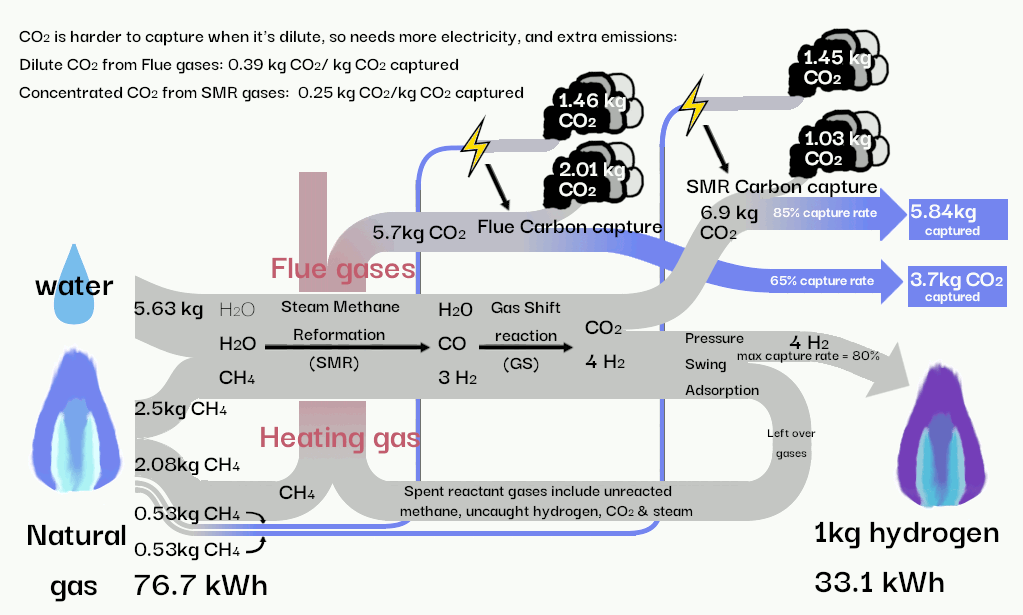
This full version of 'blue' hydrogen, capturing both reaction and flue gases, has never yet been attempted.
Existing 'blue' plants
Hydrogen production with carbon capture (of reaction gases only)
Quest, Alberta
Agrium, Alberta
Air Products, Texas
Koch, Texas
Coffeyville, Kansas
only attempt partial capture, solely from the spent reaction gases. Capturing CO2 from the flue gases is much less effective, because it is much more dilute.
Data from two power stations that captured flue emissions (Boundary Dam and Petra Nova) showed a much lower capture rate (of 65%) and greater energy needs causing 0.39kg of CO2 for every kg CO2 captured.
|
16t |
Green1 |
The process is emission free, but its electricity demands are highly polluting, as gas power stations have to be fired up to supply it.
fugitive emissions (gas leaks) from gas wells, extraction processes and transportation network typically amount to 3.5% of end product, with 20-year global warming potential 86 times more potent than CO2.
|
zero |
Green2 |
Electrolysis is only emission-free when the grid is carbon-free. Otherwise, it creates demand that has to be met by burning more carbon.
|
zero |
White |
Naturally occurring hydrogen constantly produced by geological processes deep within the earth could potentially supply more hydrogen than we could ever need, if only we can get it out and channel it to useful work. There's a big story going around the internet about a discovery in Mali, with 30 wells providing enough hydrogen to "provide electricity for the village". Despite the micro scale, geologists believe that the find is actually huge. Other discoveries in Australia, the USA and Spain have helped raise hopes that there may be hydrogen all over the world, and there might be enough to supply all our energy needs for centuries. The most promising, in Lorraine, France, is estimated to contain up to 250 million tonnes of hydrogen. The many challenges include proving that the hydrogen is recoverable, and getting it to where it can be useful.
However, all the
excitement
Large discoveries of natural hydrogen
Mali - Bourakébougou field (5mt?)
- 30 productive wells drilled by Hydroma
& Chapman Petroleum, but have struggled to commercialise it.
Spain - Monzon field, Aragon (1.1 mt)- Helios Aragon planning to begin production in 2025
US - Koloma - backed by Bill Gates, exploring US mid-continent rift valley, along with other start ups (HyTerra, Natural Hydrogen)
South Australia - six startups, including Gold Hydrogen in Yorke Peninsula & Kangaroo Island (1.3 mt?), with a seven-well drilling programme costing A$30M
France - Engie, University of Pau and others investigating huge discovery in Lorraine, of potentially 46mt
might be premature, as it is likely to be harder to extract and transport than natural gas, and contain less energy (by volume). The significance of that is that it pushes the cost up, potentially making it too expensive compared to natural gas . . . or 'grey' hydrogen.
|
NOTE - carbon emissions from each technology can be much higher in practice, depending upon the thermal efficiency of the plant, and the proportion of hydrogen harvested from the reaction.
* All of our figures ignore 'fugitive emissions'
(leaks), which in some cases, could double these global warming footprints.
Hydrogen to store energy
The grid needs dispatchable energy to fill the gaps when renewables fade
At the moment, when the grid needs more power, it simply brings more gas power stations online. However, natural gas is expensive. The grid can also use batteries and pumped storage hydro, but these can only cover a few hours of power at most. For long periods of weak winds and solar, the only other viable
alternative seems to be hydrogen, produced from spare electricity when renewables generate too much.
Only hydrogen can deliver 100 TWh of energy affordably
UK electricity demand currently peaks around 50GW, but this could double if heat pumps replace domestic gas boilers, along with requirements of electric cars and data centres. The grid needs a dispatchable power source that could supply 100GW for (say) two weeks - that’s 34 TWh. With batteries at £100/kWh, this would cost £34,000 billion. But if hydrogen can be made cheaply, underground storage could cost just a
few £billion
Where would cheap hydrogen come from?
Wind turbines rarely achieve their maximum output, so the grid will build more capacity than the level of supply it actually needs. That will lead to situations when there is too much power, when the grid has to pay either for turbines to be disconnected ('curtailed'), or for someone else to use the spare electricity. And that's where electrolysis comes in - to use that excess electricity to make hydrogen at very low cost, that can be stored away for later.
If electrolysers cost just £500k per megawatt, and can operate on free electricity for 50,000 hours, then the cost of making hydrogen could fall as low as £0.01 per kWh (29p/therm). At 1/3 of the price of natural gas, suddenly hydrogen becomes the fuel of choice to generate electricity when there's no wind.
The economics of hydrogen
Electrolytic hydrogen cost has to compete with fossil fuel alternatives to survive
Any dreams of a 'hydrogen economy' will be dead in the water unless hydrogen can match the cost of natural gas, of
£1/therm , or roughly £1/kg of hydrogen. In cheaper gas markets (eg USA or Middle East) it could be below $0.50.
The only possible way to make hydrogen cheaper than natural gas is by electrolysis
‘Grey’ and ‘blue’ hydrogen inherently cost more than the natural gas they’re made from. Any 'white' (naturally occurring) hydrogen will cost more than natural gas to extract. So that just leaves 'green' ... electrolysis. The £1/kg target presents a formidable challenge, as electricity costs today are much higher than natural gas per kWh, in addition to the cost of electrolyser machinery.
Future costs of hydrogen
Source | Power price
£/MWh | Power costs
£/kg H2
|
Plant costs
£/kg H2
|
Total cost
£/kg H2 |
| H2 from fossil-fuel (UK) |
n/a
|
£1.60/kg | £0.70 | £2.30 /kg |
| H2 from fossil-fuel (USA) |
n/a
|
$0.50/kg | $1.00 | $1.50 /kg |
| UK Grid electricity |
£ 85/MWh
|
£4.25/kg | £0.50 | £4.75 /kg |
| UK Solar H2 (2030) |
£ 36/MWh
|
£1.93/kg | £0.50 | £2.43 /kg |
| UK Curtailment H2 |
£ 12/MWh
| £1.80/kg | £0.50 | £1.20 /kg
|
Hierarchy of hydrogen uses
The possible uses for hydrogen far exceed what will ever be available
Hydrogen has been proposed as a potential replacement for almost every situation where fossil fuels generate emissions. However, such quantities of hydrogen are inconceivable on cost grounds.
Instead, we will have to be selective in how we use hydrogen: there will be a pecking order. So how do we choose?
Power-to-hydrogen-to-power - Using my grid model, I estimate that the cheapest dispatchable power will come from 100TWh of hydrogen made from up to 70GW of surplus electricity, powering 70GW of gas turbines, despite the very low efficiency compared to other storage.
Steel & cement manufacture - Both of these notoriously polluting industries might be
decarbonisable using hydrogen.
Oil refining - Currently the number one use of hydrogen is to turn constituents of crude oil into fuel grade hydrocarbons. Hopefully the need for fuel oils will fall steeply in the coming years.
Chemicals industry - Hydrogen is a very common ingredient in chemical reactions used to manufacture plastics, pharmaceuticals, paints, adhesives, detergents, and many other chemicals.
Fertiliser - hydrogen is a precursor to ammonia used to make fertiliser (and explosives). Over-use of fertiliser degrades soil, pollutes waterways, and causes harmful NOX emissions. Some
researchers
estimate that fertiliser accounts for 5% of the world's greenhouse gas emissions, that could be cut to 1% without loss of productivity, with clean manufacture and improved farming practices regarding over-use.
Glass - Another building material with a high carbon footprint. The high temperatures of glass manufacture may need hydrogen to decarbonise.
Shipping - Hydrogen could possibly be used to make fuels for shipping, but it it unlikely to compete on cost with fossil fuels used for ships today, so may never be viable.
Aviation - similar to shipping. See inset section 'hydrogen for shipping and aviation'
Road transport - hydrogen has already lost the race to decarbonise road transport, to battery electric vehicles, which are much cheaper, simpler, more efficient, and better-performing.
Domestic heating - Converting electricity to hydrogen to heat homes wastes 50% of the energy. Far better to use a heat pump, that triples the energy, so is six times more efficient than a hydrogen boiler.
h2 supply
The Hydrogen Future
Cheap hydrogen will be limited to energy storage for electricity generation
Hydrogen from surplus electricity will be cheap, but limited in supply. After that, hydrogen will have to be made from full-price electricity, which will likely cost more than natural gas.
The grid has to build much more renewables capacity
than it needs at any moment, because renewables never actually work at 100% output. Offshore wind averages around 45% of its rated output, so the output for a 10MW will vary between 0-10MW, but average 4.5MW over time. For solar (in the UK), with day and night, clouds and seasons, the figure is 11.5% of its rated output. . When cheap wind (at say £50/MWh) is low, the grid needs to burn gas (at £110/MWh) to make up the difference. So the grid can save £60/MWh by building more capacity.
However, when the wind picks up, now there’s too much electricity, and the unwanted surplus still costs its full price, so now the grid loses £50/MWh, unless it can find an alternative buyer for the surplus. That’s where storage comes in. The grid sells its excess electricity to storage providers, who make their money by selling it back to the grid when the wind drops. First, batteries or pumped hydro will buy it, but when they are full, only hydrogen can keep storing away more and more energy.
Selling electricity for hydrogen production reduces the losses from producing too much electricity. The cheap electricity makes hydrogen that's cheaper than natural gas, so the grid can afford to use it to make electricity when there's no other source. This can tip the balance away from reliance on expensive natural gas to fill the gap, to producing spare electricity for later by building more renewables.
Vast hydrogen reservoirs made from free electricity, stored in depleted gas fields
Free surplus power can drive electrolysers
pumping billions of cubic feet of cheap hydrogen into storage in depleted gas fields. Then when wind and solar are low, the grid can fire up the old gas & steam turbines (CCGT) that used to run on natural gas, to generate electricity on demand, using the hydrogen from storage.
UK might need up to 100TWh of hydrogen storage to get through winters
Rough gas field (storage facility) will hold 200 billion cubic feet of hydrogen (16TWh), made from 5 million tonnes of highly purified water (2000 olympic swimming pools), and cost £2 billion to create.
Hydrogen for other applications might come from sunnier climates
The demand for hydrogen for oil refining will largely disappear, but demand for other applications such as fertiliser & chemicals will continue, possibly with new demand for steel and/or cement making. However, the cost of adding extra renewables and electrolysers to produce it could be reduced by moving production to a sunnier climate where solar panels can produce three times as much electricity.
Certainly if hydrogen-derived fuels ever displace fossil fuels for shipping and aviation, they are more likely to come from huge solar farms in deserts rather than from the UK.
LINKS to hydrogen resource pages
IEA - interactive map of over 2000 hydrogen projects worldwide
IEA - interactive map predicting cost of hydrogen in 2030
UK.gov - Hydrogen production costs - a 2021 assessment of technologies and future hydrogen production costs
IEA - comparison of emission intensities of different hydrogen sources
RW Howarth - How green is blue hydrogen?
IEA - alternative figs for standalone SMR plant